

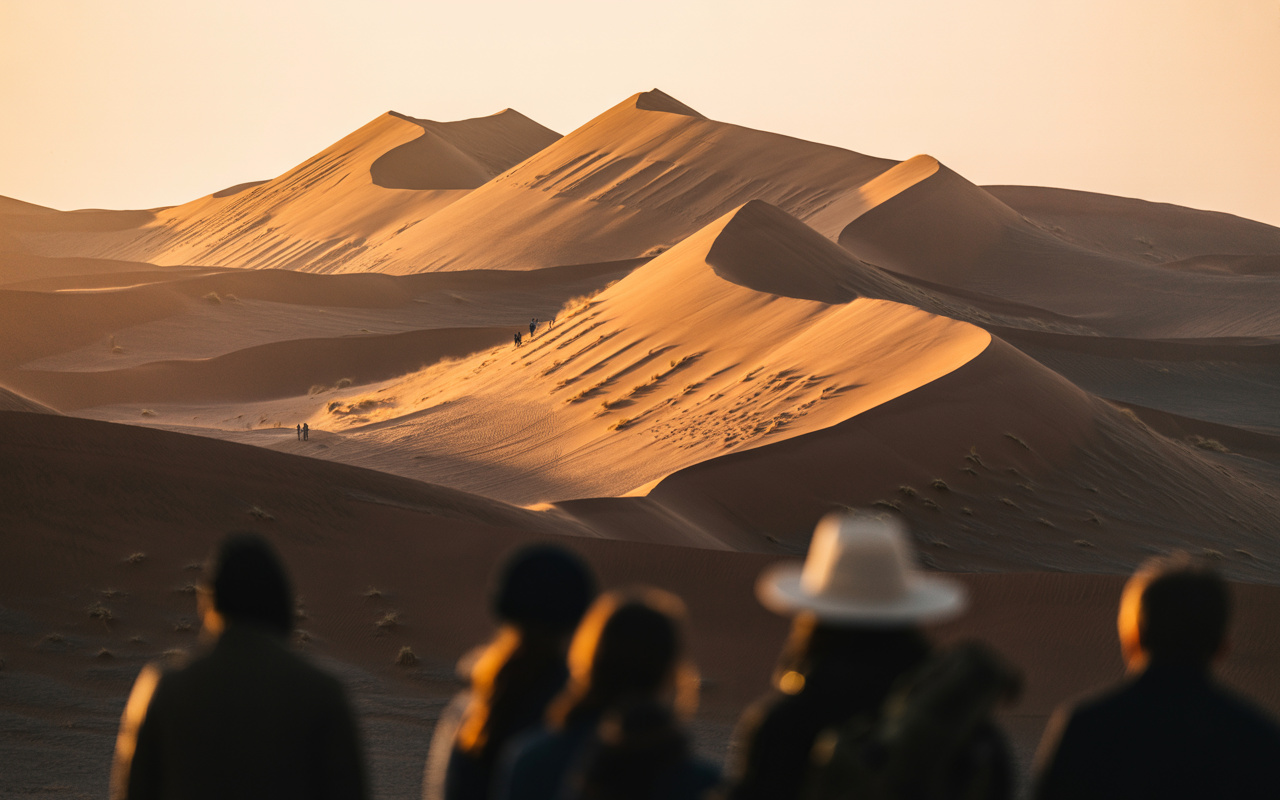
Some landscapes make you pause. Others make you breathless. But Namibia—vast, silent, and sculpted by time—does something rare: it makes you listen. Not to people or traffic or chatter, but to the earth itself. In its sweeping deserts and lonely coastlines, I found a sense of wonder I didn’t know I was missing.
My journey began in Windhoek, a city that feels more like a calm prelude than a bustling capital. German colonial buildings line its tidy streets, but the rhythm is unmistakably African—warm greetings, slow steps, and colours that seem to hum under the sun. After a short rest, I set off toward the place that had long lived in my imagination: the ancient sands of the Namib Desert.
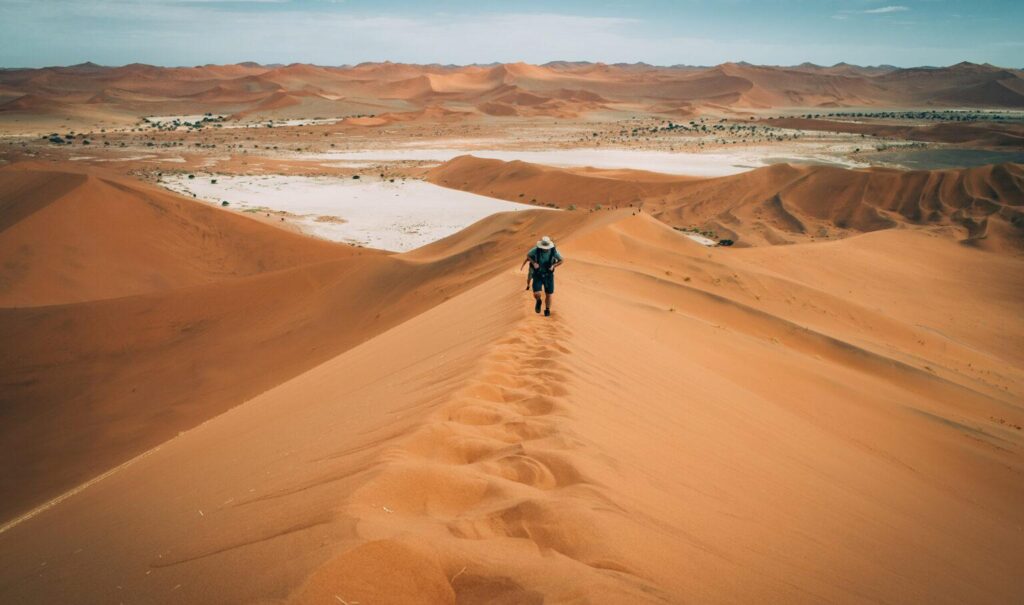
The first time I saw the dunes of Sossusvlei, the world stilled. They rose like titans—tall, smooth, and fiery red—shifting subtly with every passing breeze. Climbing Dune 45, one of the most photographed dunes on Earth, felt like walking along the spine of a giant dragon. The sand was cool in the morning, but my legs burned as I pushed upward, one soft step at a time. When I reached the summit, the sun broke over the horizon, and the desert transformed into an ocean of molten gold. It was one of the most moving sunrises I have ever witnessed.
Nearby lies Deadvlei, a place so surreal it feels born from dreams. A clay pan dotted with charcoal-black skeletons of acacia trees—dead for centuries yet perfectly preserved—it stands in striking contrast to the towering red dunes around it. Walking across the white earth, I felt like I had stepped into an abstract painting: sharp shadows, stark lines, and a silence so complete it rang in my ears. I stood beside one of the trees, imagining how it once thrived here before the dunes shifted and water vanished. It was haunting, beautiful, and oddly humbling.
From the desert heart, I travelled toward the Atlantic coast, where Namibia reveals another one of its contradictions: the Skeleton Coast. Here, the world feels rugged, eerie, and defiantly wild. Fog rolls off the ocean each morning like ghostly fabric, wrapping the coastline in mystery. Shipwrecks lie half-buried in sand, their wooden ribs exposed to the sky. Standing beside one rusted hull, I felt the power of the sea—not gentle and blue, but fierce, cold, and unpredictable. The beach was nearly empty except for seals lounging like half-asleep guardians of this otherworldly place.
My next stop was Swakopmund, a quirky town where German bakeries sit beside dune adventure companies. I rode an ATV across the golden dunes just outside the town, the wind whipping at my clothes as the landscape blurred into waves of sand. Later, in a small café, I tasted krapfen—a puffy German doughnut—while listening to locals switch between Afrikaans, German, and English effortlessly. Namibia’s cultural blend is subtle yet deeply fascinating.
But the moment that anchored the trip in my heart happened far north in Damaraland, where desert elephants and black rhinos still roam. With a local guide, I joined a small conservation trek to track elephants. Hours passed with only footprints and broken branches to show their trail, until suddenly, we saw them: a small herd moving across the desert like shadows. They moved slowly, purposefully, their massive ears fanning the warm air. Watching them felt sacred—like being allowed to witness a conversation between earth and time.
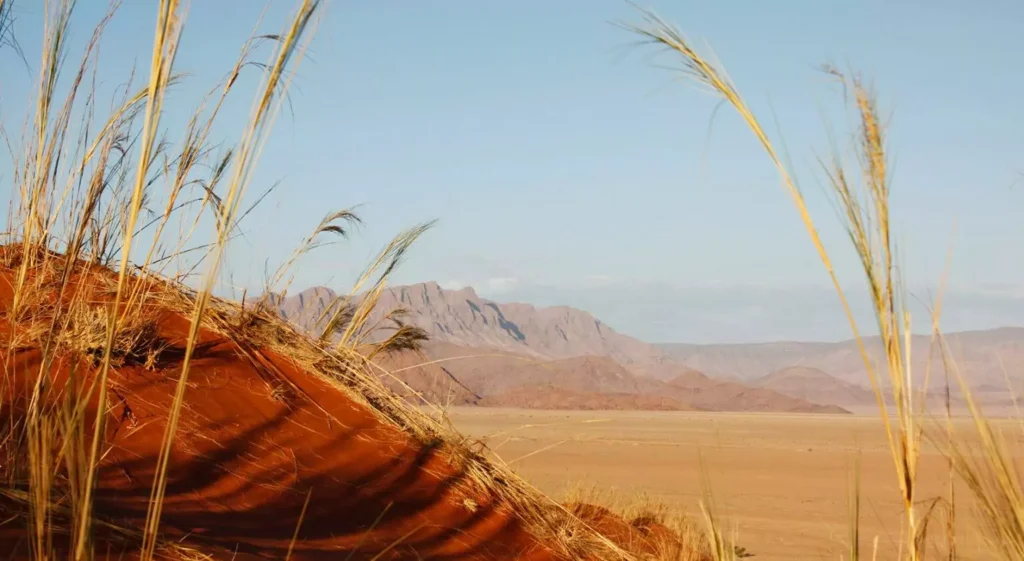
Evenings in Namibia carry their own magic. At a remote lodge near Twyfelfontein, I sat by a fire, listening to guides share stories of the land and its ancient San rock carvings. The night sky exploded with stars—millions of them—so clear it felt like someone had scrubbed the heavens clean. I could see the Milky Way stretching across the sky like a luminous river. It reminded me how tiny and temporary we are, yet how lucky to witness landscapes shaped over millions of years.
Namibia is not a place you simply visit—it’s a place that sinks into you slowly, like the cool desert air before dawn. It teaches you to appreciate silence, to honour vastness, and to find beauty in emptiness.
And long after you leave, you still hear it—the soft whisper of dunes singing in the wind.