

In recent decades, the world has witnessed the startling disappearance of several islands from maps—some once inhabited, others ecologically significant, all now lost beneath rising seas or shifting earth. The vanishing of islands is a powerful illustration of how environmental, geological, and human factors reshape our planet’s geography, often with profound consequences.
Let’s explore which islands have disappeared completely, why it happened, and what these losses mean for communities and ecosystems.
The Growing Phenomenon of Disappearing Islands
Islands don’t just vanish overnight without reason. Their disappearance is usually the result of one or more converging factors: rising sea levels driven by climate change, coastal erosion intensified by storms and human activity, tectonic movements, and sometimes volcanic destruction. These processes can reduce an island to nothing but submerged reefs or entirely new landscapes.
1. The Solomon Islands’ Lost Isles
In the Pacific Ocean, several small islands in the Solomon Islands chain have vanished since the mid-20th century. Notably, five islands that once supported communities and coconut plantations have been lost to the sea. One such island, Kale, has disappeared beneath rising tides.
The main causes:
- Sea-level rise linked to global warming.
- Coral reef degradation which weakens natural barriers protecting islands from wave action.
- Storm surges that erode shorelines rapidly.
This loss forced displaced inhabitants to relocate, highlighting the human cost of vanishing lands.
2. New Moore Island (South Talpatti Island)
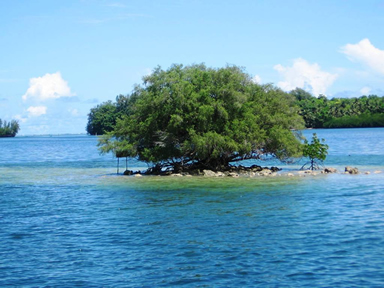
Situated in the Bay of Bengal, New Moore Island was a tiny uninhabited island caught in a territorial dispute between India and Bangladesh. Rising sea levels combined with shifting river sediments caused by the Ganges-Brahmaputra delta to submerge the island completely by 2010.
This island’s disappearance symbolized how climate change intersects with geopolitical tensions, as the submerged land altered maritime boundaries between the two nations.
3. Isle de Jean Charles, Louisiana, USA
Often called America’s first “climate refugees,” the residents of Isle de Jean Charles have watched their island shrink dramatically over decades. More than 90% of this barrier island’s landmass has been lost since the 1950s.
Factors contributing to its vanishing:
- Sea-level rise and coastal subsidence.
- Disrupted sediment supply caused by upstream dams and levee construction.
- Oil and gas extraction which destabilizes the land.
The state has launched a resettlement project to relocate the island’s Indigenous community, marking one of the earliest large-scale managed retreats in the U.S.
4. Some Atolls in the Maldives and Pacific
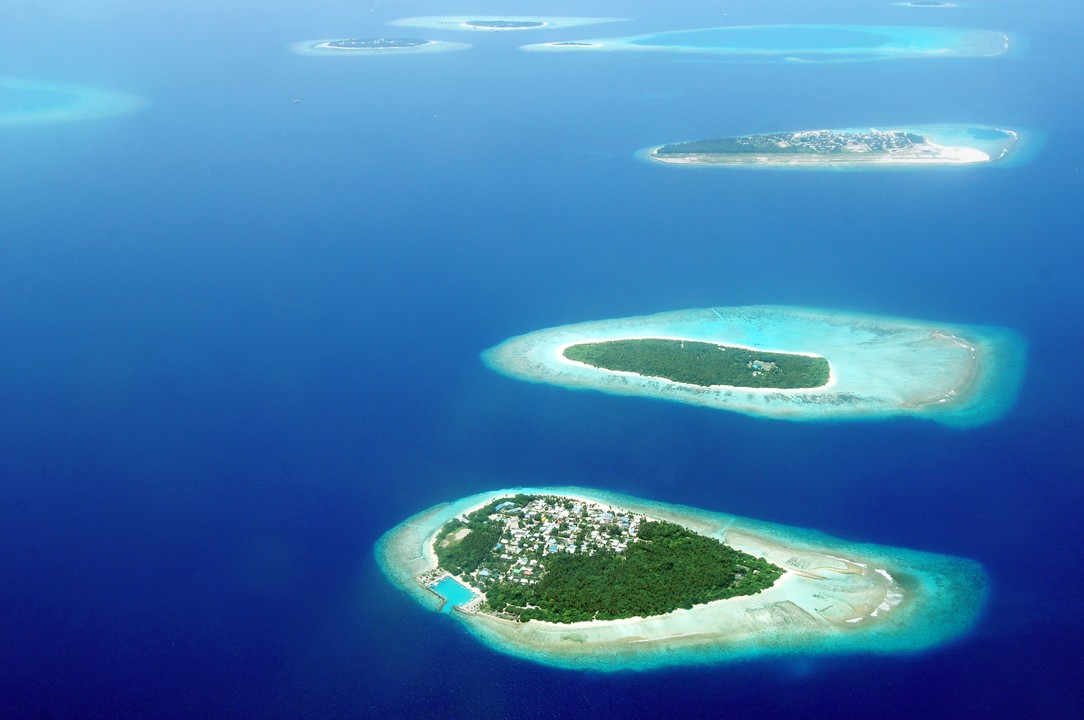
Low-lying coral atolls in the Maldives and parts of the Pacific Ocean face constant threats from rising seas. Although many have not completely vanished yet, smaller sandbanks and islets have disappeared or significantly shrunk.
Human activities like sand mining for construction and reef damage from tourism and pollution accelerate erosion, compounding the effects of climate change. Without intervention, these islands face a future under water.
5. Geological Disasters: Volcanic Islands Lost to the Sea
Not all island disappearances are slow and climate-driven. Some vanish rapidly due to natural disasters.
- Surtsey, Iceland: A volcanic island formed in 1963 is still present but slowly eroding.
- Krakatoa, Indonesia: Its 1883 eruption obliterated the island, though new land formed afterward.
- Other smaller volcanic islands have been completely submerged due to erosion or tectonic activity.
These geological forces reshape islands far faster than climate factors but often with different ecological impacts.
Why Are Islands So Vulnerable?
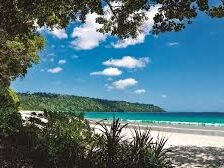
Islands often have low elevation and rely on coral reefs, mangroves, and natural sediment flows to maintain their shape. Rising seas wash away shorelines, while coral bleaching weakens natural protection. Human actions such as dredging, construction, and deforestation remove buffers against erosion.
Moreover, many island communities depend on these lands for food, culture, and identity, making their loss deeply personal and urgent.
The Human and Environmental Toll
When islands vanish, it’s not just land that disappears:
- Displacement: People become climate refugees, forced to migrate with few legal protections.
- Loss of Biodiversity: Unique island ecosystems, including endemic plants and animals, are destroyed.
- Cultural Erosion: Indigenous traditions tied to place are lost or disrupted.
- Economic Impact: Fisheries, tourism, and agriculture suffer from land loss.
These effects ripple far beyond the islands themselves.
What Can Be Done?
Efforts to combat island loss include:
- Coastal restoration projects using mangroves and coral reefs.
- Sustainable development that respects natural buffers.
- Resettlement programs with cultural sensitivity.
- Global climate action to reduce emissions and slow sea-level rise.
Preserving remaining islands requires a combination of local action and international cooperation.
Final Thoughts
Islands disappearing from maps are a sobering reminder that the Earth’s geography is not static. What was once solid land can vanish beneath the waves or crumble due to natural forces—and human activities have accelerated this process. The stories of vanished islands highlight the urgent need to address climate change, protect vulnerable ecosystems, and support displaced communities.
Maps may lose these islands, but their stories must remain etched in our collective consciousness as a call to action for a more sustainable future.