

There’s something profoundly human about pushing the limits of habitability—to carve out a life where few dare to tread. From windswept islands in the South Atlantic to remote research stations on the Antarctic ice, people have settled the planet’s loneliest nooks in pursuit of community, purpose, or scientific discovery. Let’s take a virtual journey to meet some of the inhabitants of Earth’s most isolated corners.
1. The Islanders of Tristan da Cunha
Often cited as the world’s most remote inhabited archipelago, Tristan da Cunha lies over 1,700 miles from the nearest continent. Its population hovers around 250, descended from just a handful of 19th-century settlers. Islanders here are fiercely self-reliant: they grow their own vegetables in volcanic soil, fish the cold South Atlantic waters, and even run their own postal service. Generations of close-knit families share traditions forged in isolation—like their annual “Floreal Festival,” celebrating floral blooms that carpet the island each spring.
2. The Pitcairn Islanders
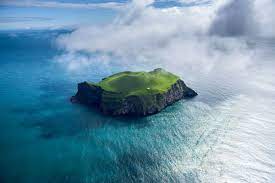
In the vastness of the South Pacific, Pitcairn Island’s 50–60 residents claim lineage from the infamous HMS Bounty mutineers and their Tahitian companions. Accessible only by a rocky shore landing, Pitcairn offers no airport, no hospital—only a rugged terrain and a tiny community that governs itself. Education happens in a single classroom, and supply ships arrive quarterly, prompting villagers to master carpentry, gardening, and first-aid skills. Their resilience in the face of logistical challenges embodies the spirit of self-governance hundreds of miles from any urban center.
3. Scientists in Antarctica
While not permanent civilians, research station staff in Antarctica remain among the planet’s most isolated occupants. On bases like McMurdo Station or the French–Italian Concordia, scientists endure months of polar night, temperatures plunging below –50 °C, and supplies arriving only in summer. Life here is regimented—laboratory work, ice-core drilling, and routine snow-shoveling punctuated by communal meals in brightly lit dining halls. In return, they unlock insights into climate history, astrophysics, and glaciology, often forging bonds as strong as any family.
4. Nomadic Tribes of the Central Sahara
Amid the shifting sands of the Sahara Desert, Tuareg and Tubu nomads traverse hundreds of miles in camel caravans. Though not fixed in one spot, their lifeway thrives on isolation: oases become hubs for trade and social gathering, but otherwise their routes pass through empty deserts where encountering another soul can be a rare event. Mastery of desert navigation, deep knowledge of water sources, and oral traditions passed down over centuries sustain these tribes in an environment where modern infrastructure simply cannot reach.
5. Himalayan Monasteries
Perched on cliff-side ledges above 4,000 meters, Buddhist monks in remote Himalayan monasteries live in seclusion by choice. Places like the Phugtal Monastery in India’s Ladakh region are only accessible by long treks or perilous cliff ladders. Within stone walls and prayer halls, monks observe rigorous daily rituals, study ancient texts, and welcome pilgrims who risk the elements for spiritual solace. In these lofty hermitages, community isn’t measured by head count but by shared faith and discipline.
Why People Choose Isolation
What drives humans to inhabit these far-flung outposts? For some, it’s economic opportunity: fishing rights in Tristan da Cunha, or research funding in Antarctica. For others, cultural preservation—maintaining ancestral traditions untarnished by global homogenization. Still others seek solitude or spiritual clarity, trading convenience for a life aligned with nature or faith. Across these contexts, isolation demands resilience, adaptability, and often, a deep sense of interdependence within tiny communities.
Challenges and Future Prospects
Isolation can be double-edged. Access to healthcare, education, and emergency services is limited. Climate change threatens fragile ecosystems—from rising sea levels in low-lying islands to glacier melt in polar regions. Younger generations may feel the pull of cities, risking demographic decline for these remote settlements. Yet, advances in renewable energy, satellite internet, and supply logistics offer hope. Solar panels fuel desalination plants on desert islands; high-altitude drones deliver medical samples across mountain passes; remote learning connects monastery novices with global teachers.
A Testament to Human Tenacity
From Atlantic isles to polar wastes, from desert tracks to Himalayan heights, the people who call the world’s most isolated places home remind us of the extraordinary lengths we’ll go to preserve culture, advance knowledge, and find meaning. Their lives, shaped by solitude and interdependence in equal measure, stand as a testament to human adaptability—and the enduring drive to belong, even where the map ends.